Contributed by DAL Advisory Committee member, Jill Boeck
In an age of helicopter parenting and heightened safety concerns, the concept of risky play in early childhood can raise eyebrows. But increasing research and real-world observations show that taking measured risks in play is not only natural but essential to healthy child development. Rather than eliminating risk, high-quality early childhood programs are finding ways to manage and support risky play, helping children grow into confident, capable, and resilient individuals.
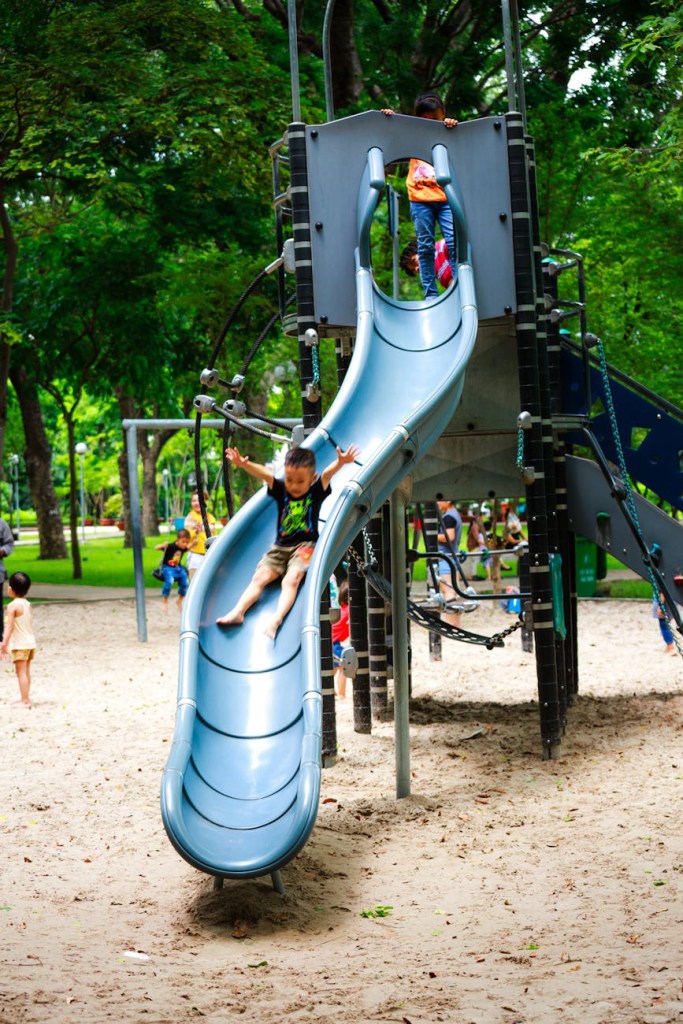
What Is Risky Play?
Risky play involves thrilling and exciting activities where children explore uncertainty and test their limits. Common forms include:
• Climbing higher than usual
• Rough-and-tumble play like wrestling
• Running at high speeds or through uneven terrain
• Using tools like sticks or child-safe hammers
• Exploring elements like water, fire (in controlled environments), or heights
• Play with loose parts (e.g., logs, tires, ropes)
It’s important to note that risky play is not reckless play. The goal isn’t danger—it’s about children learning to assess risks, solve problems, and build independence.

The Benefits of Risky Play
1. Builds Resilience and Confidence
When children face challenges and succeed, even after a few stumbles, they develop a sense of mastery and belief in their abilities.
2. Develops Risk Assessment Skills
Through experience, children learn to judge what feels too high or too fast, and what they’re capable of managing.
3. Enhances Physical Development
Climbing, balancing, and lifting heavy objects help build strength, coordination, and motor skills.
4. Encourages Creativity and Problem-Solving
Open-ended, risky environments require children to think critically and creatively.
5. Fosters Social Development
When kids collaborate in active play, they learn negotiation, turn-taking, and empathy.
Overcoming the Fear: What Educators Can Do
While the benefits are clear, supporting risky play in early childhood programs requires a shift in mindset and careful planning. Here are some strategies educators can use:
• Create a “Yes” Environment
Instead of saying “No, that’s too dangerous,” consider how the environment can be adjusted to allow the play more safely.
• Assess, Don’t Eliminate, Risk
Use risk-benefit assessments to identify hazards and how they can be managed rather than removed.
• Educate Families
Communicate with parents about the value of risky play and how it supports development.
• Model Safe Behavior and Language
Show children how to climb safely, use tools, or assess their own limits.
• Observe and Intervene Strategically
Be present, but not overbearing. Let children lead, stepping in only when truly necessary.

Risky play isn’t about putting children in harm’s way—it’s about giving them the space to grow, explore, and thrive. Early childhood programs that embrace this approach foster resilient, confident, and curious learners who are better prepared for the complexities of life. By reframing our view of risk as a tool, not a threat, we open up a world of possibilities for young children.
Rust Keeler is a Risky Play guru you can visit him here for more strategies to supporting risky play:
Website https://rustykeeler.com/
Facebook page https://www.facebook.com/rustykeelerdesigns/
 Directors As Leaders